
Knowledge

Weather Warnings Caroline Rafizadeh, a cognitive psychology PhD student at the University at Albany, monitors student Samantha Hetherington during an eye-tracking study on how viewers process TV weather alerts. The study found that cluttered on-screen warnings can distract from critical, life-saving details. Researchers say simplifying alerts could help viewers better focus on key instructions during severe weather events. Photograph: Patrick Dodson

Impact

Resurrecting History To help visitors navigate the more than 467 acres of Albany Rural Cemetery, Rui Li, associate professor in the Department of Geography, Planning and Sustainability, leads the development of the Albany Rural Cemetery Explorer (ARCE). ARCE is a public engagement project providing students, like alums Micah Wang and Weiming Lan, with hands-on experience developing mapping tools to assist the cemetery’s visitors in finding the many family stories and buried histories hidden among the 135,000 graves. Photograph: Patrick Dodson

Discovery

Model Subject The cranium of a male gelada, a large-bodied monkey from the Ethiopian highlands, glows under a laser scanner in Professor Adam Gordon’s anthropology lab. The resulting 3D scan is reproduced as a 3D-printed model for instruction and research. Gordon and his graduate students examine skeletal material of primates and other mammals from around the world to explore how their bones and joints have evolved in response to how they moved through their environments. Photograph: Patrick Dodson

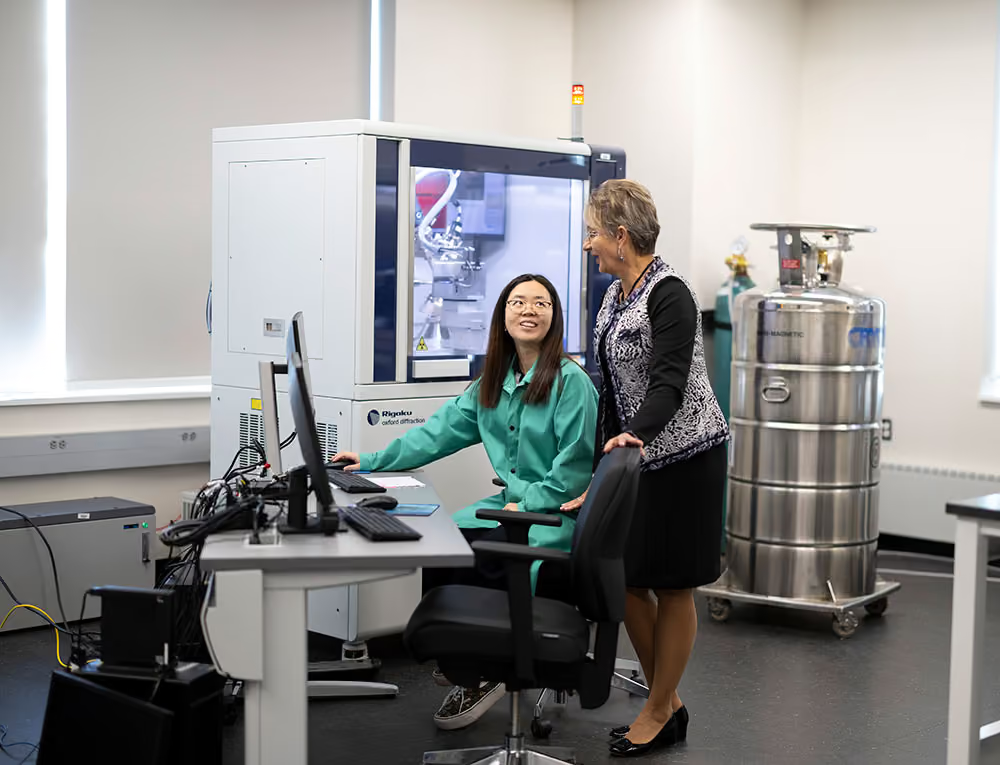
Professor Petrukhina and Yikun Zhu working in the lab together.
Field Notes

New Insights on Energy Storage

Distinguished Professor and Carla Rizzo Delray Professor of Chemistry Marina Petrukhina and PhD graduate Yikun Zhu have shown how small, curved fragments of graphene — called molecular nanographenes — can store and transport electrons. The work holds important implications for developing future sustainable energy storage technologies.

Professor Biswas points to a white board while teaching a class.
Field Notes

Unscripted Rewards: When CEOs Talk Tech

By analyzing nearly 48,000 corporate earnings calls, Professors Rita Biswas (Finance), Lee Spitzley (Information Security and Digital Forensics), and Bill Wales (Management) found that investors reward CEOs who speak unscripted about emerging technologies, while expecting different messages from CFOs. “Markets are surprisingly good lie detectors,” says Biswas, pictured. “They reward executives who can defend their claims on the spot, not just script them in advance.”

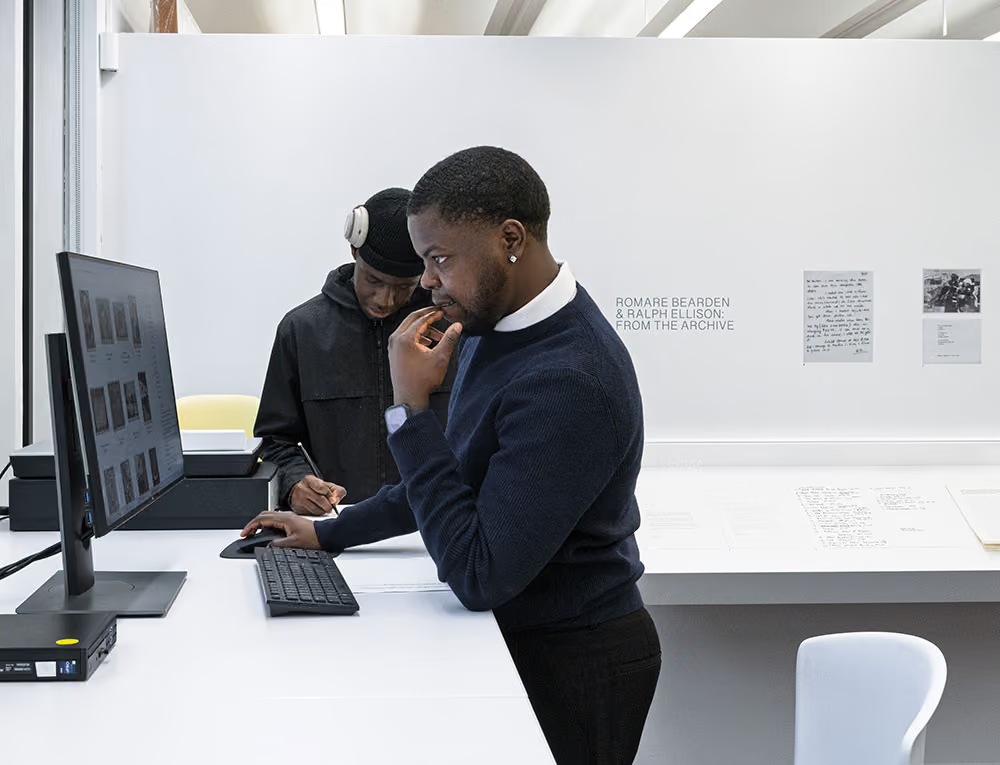
A student examines collections displayed on a large computer monitor.
Field Notes

Vital Grant to Create Dedicated Art Museum Archive

Powered by a $200,000 grant from the Henry Luce Foundation’s American Art Program, the University Art Museum (UAM) will create a centralized and professionally maintained space for the preservation and study of the UAM’s extensive holdings. “For nearly six decades, the museum has presented ambitious and influential exhibitions by artists who have shaped contemporary art and culture,” said Corinna Ripps Schaming, UAM director/chief curator. “This archive will preserve that history and make it newly accessible ... while opening new possibilities for research, teaching, and future exhibitions.”

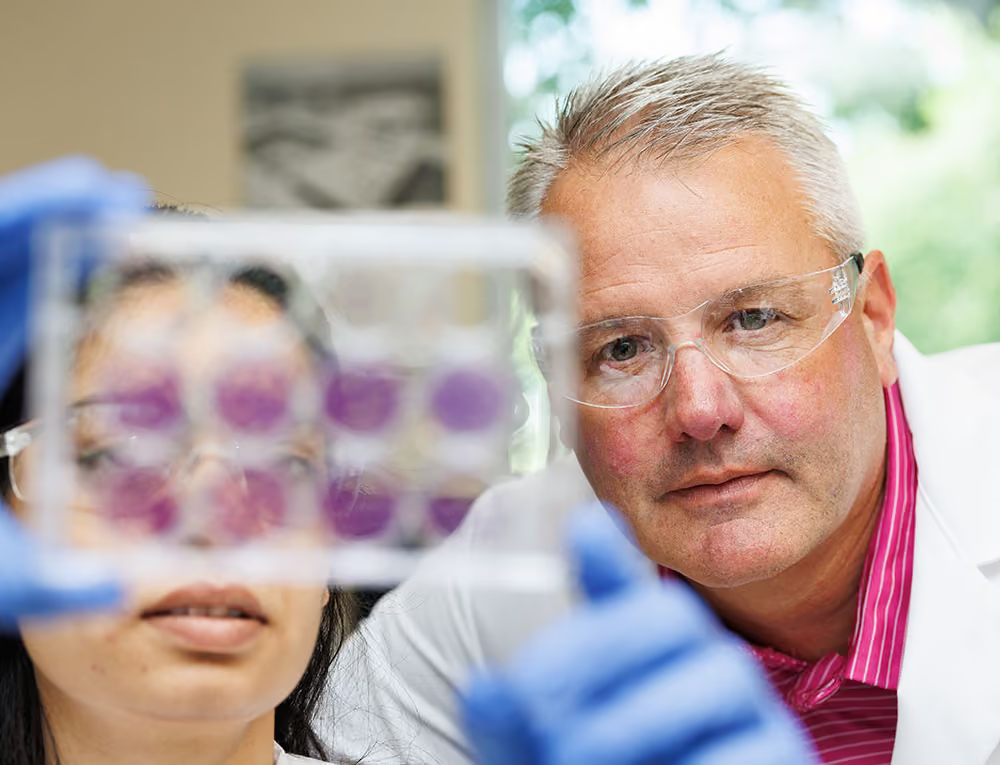
Begley and another research look closely at a slide with clear and purple dots.
Field Notes

Could Yogurt Protect Firefighters' Lungs?

A five-year research project including UAlbany RNA Biologist Tom Begley and researchers from Massachusetts Institute of Technology and the University of Arizona received $3.9 million from the National Institute of Environmental Health Sciences to investigate how cells respond to naphthalene, a harmful chemical found in wood smoke and other combustion products, and whether a molecule highly concentrated in yogurt can help block the smoke’s harmful effects.

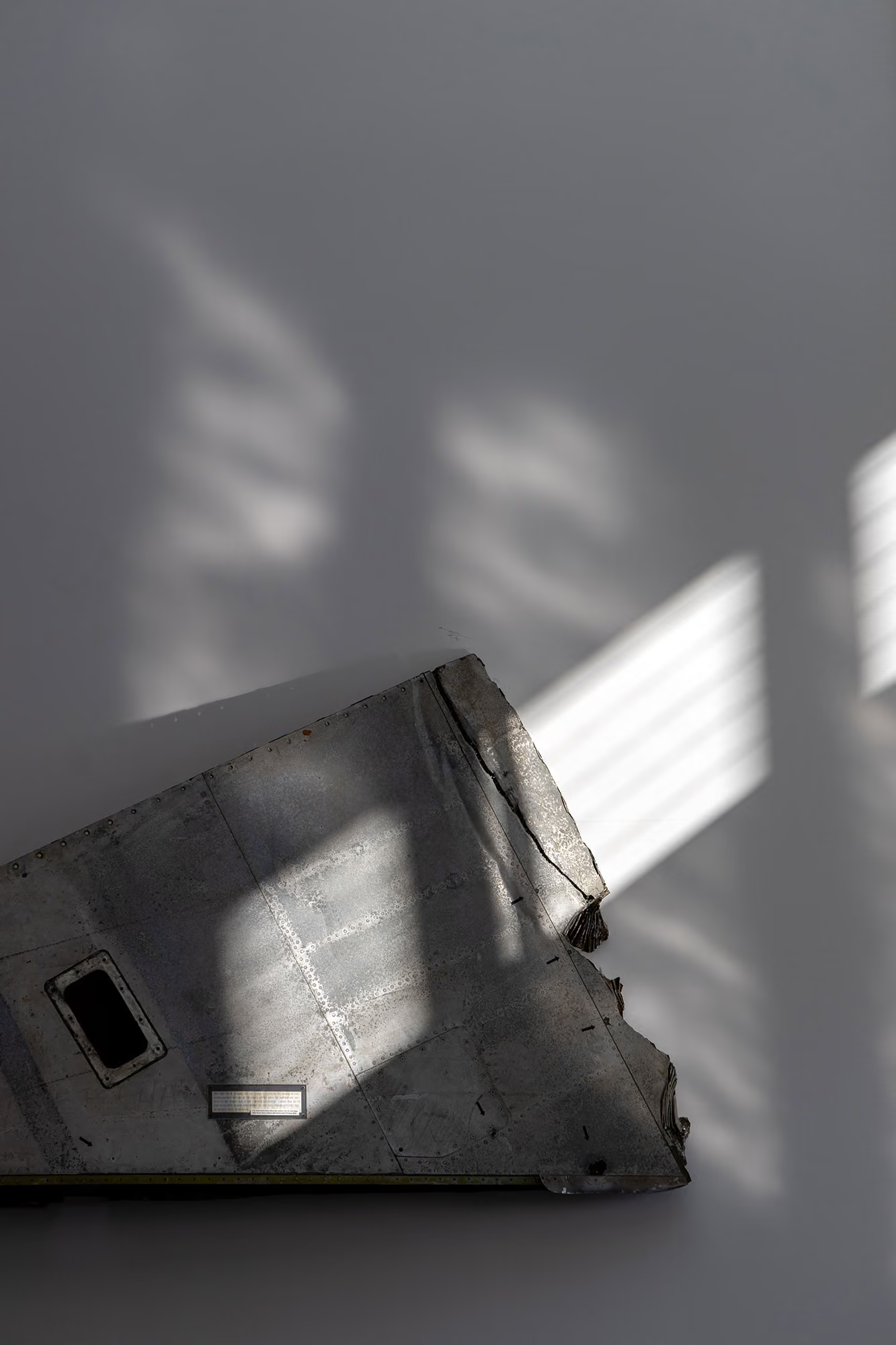
A black and white close up of the Pan Am wing with a streak of light shining in from a nearby window.
Object Lesson

When Lightning Strikes

Mounted to the wall on the third floor of ETEC on the Uptown campus is the shattered wingtip of Pan Am Flight 214 that crashed in 1963 after being struck by lightning. UAlbany Professor Bernard Vonnegut, an expert in lightning formation, assisted in the crash investigation and some of his pioneering research advanced our current understanding of how lightning forms in thunderclouds — and how to reliably track it. Thanks to the work of UAlbany atmospheric scientists, the National Lightning Detection Network was developed at UAlbany in the 1980s with support from the National Science Foundation and NASA. The network consists of more than 100 remote, ground-based sensing stations located across the United States that instantaneously detect the electromagnetic signals given off when lightning strikes the earth’s surface. The system is a life-saving example of UAlbany’s expertise in fundamental and applied atmospheric research. Photograph: Brian Busher; Research: Jordan Carleo-Evangelist

Connection

Hats Off On Bob Ford Field, under the lights of Tom and Mary Casey Stadium, UAlbany football players raise their helmets high to salute the marching band as the Great Danes celebrate their first win on Aug. 28, defeating New Hampshire 28-14 under new head coach, Tom Perkovich. Photograph: Patrick Dodson
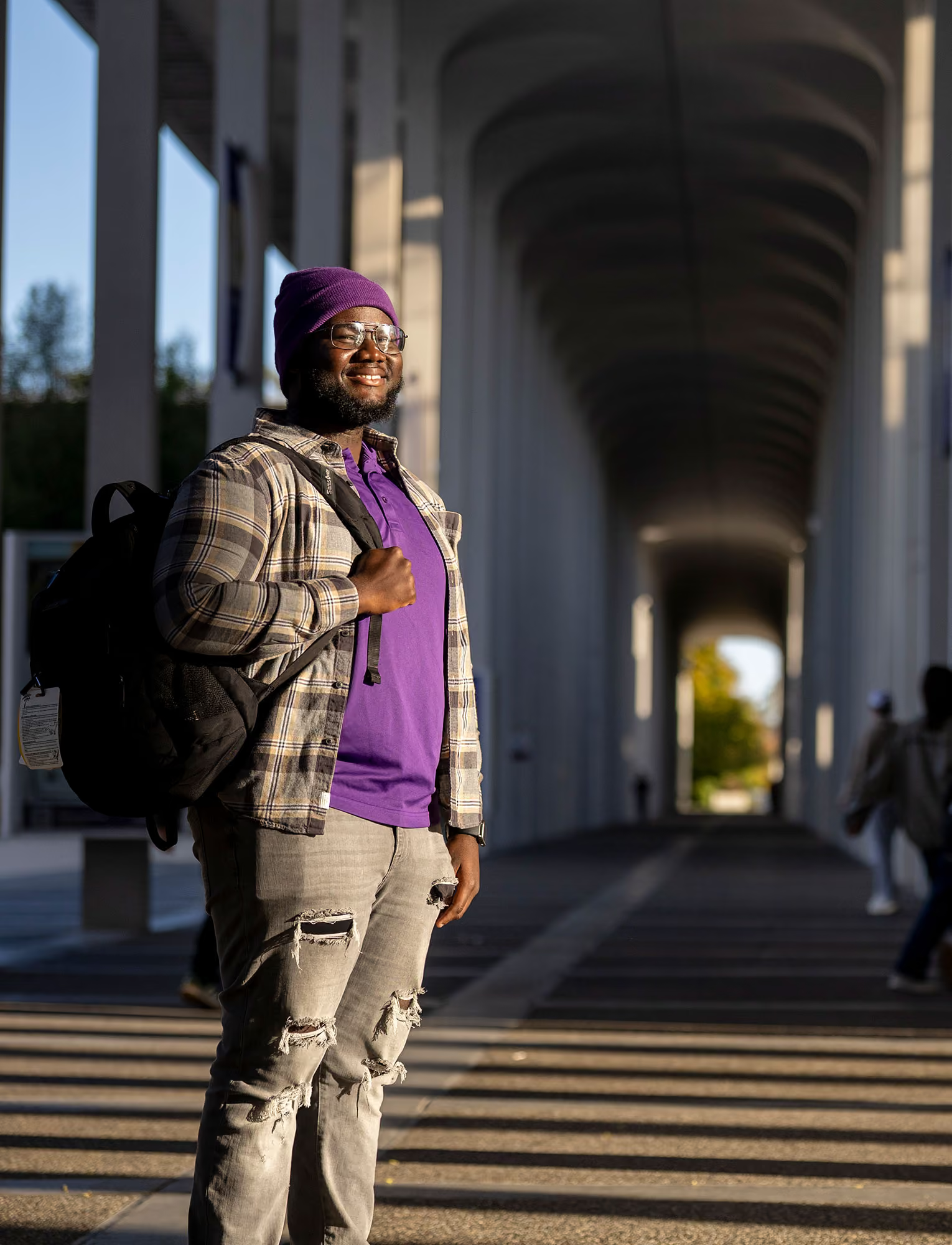
Jamar outside of the College of Arts and Sciences building
Podiate
“I’m thinking how Golden Hour really lights up the Podium. As everyone goes about their individual days, not thinking about the stranger beside them or the fact that we are all one community, I’m reminded that we each have our own self-important lives. But sometimes, it’s nice to simply say ‘Hi’ to a stranger who, in turn, might become a friend.”
Jamar, Outside the College of Arts and Sciences Building
Wisdom

What's become more important to you over time?

“ I find spending time with my loved ones has become increasingly more important to me over time. It’s not the grand gestures that make an impact on me, but the simpler joys in life, like enjoying dim sum with my husband, Paul (class of ’92), seeing my kids happy, or petting my pug that bring me so much happiness now.”

Catherine MA '92, Staten Island, NY

“ Giving myself grace has become more important over time. I have spent years becoming someone I could depend on. Now, I am learning how to care for the person I have always asked to keep going.”

Rashan Brown '17, Bronx, NY

“ Over time, I’ve realized that protecting my time has become just as important as how I spend it. Saying yes to what truly matters and no to what doesn’t has brought more balance, purpose, and peace.”

Shalain Garcia '07, MA '09, Albany, NY
Remember

Heaven-Sent Buzzer Beater

Trailing Stony Brook by two points with just 1.6 seconds remaining in the 2015 America East Conference championship game, guard Peter Hooley, mourning the death of his mother just weeks prior, snagged a long rebound at the top of the key and sunk a three-pointer that sent the Great Danes to the NCAA tournament for the third year in row. After the game, with the Australian flag draped around his shoulders, Hooley lifted his arms and looked skyward in salute to his mother. “When you got angels watching you, anything can happen,” he said. Photograph: Paul Miller

Relive the Moment: See Peter Hooley's game-winning shot